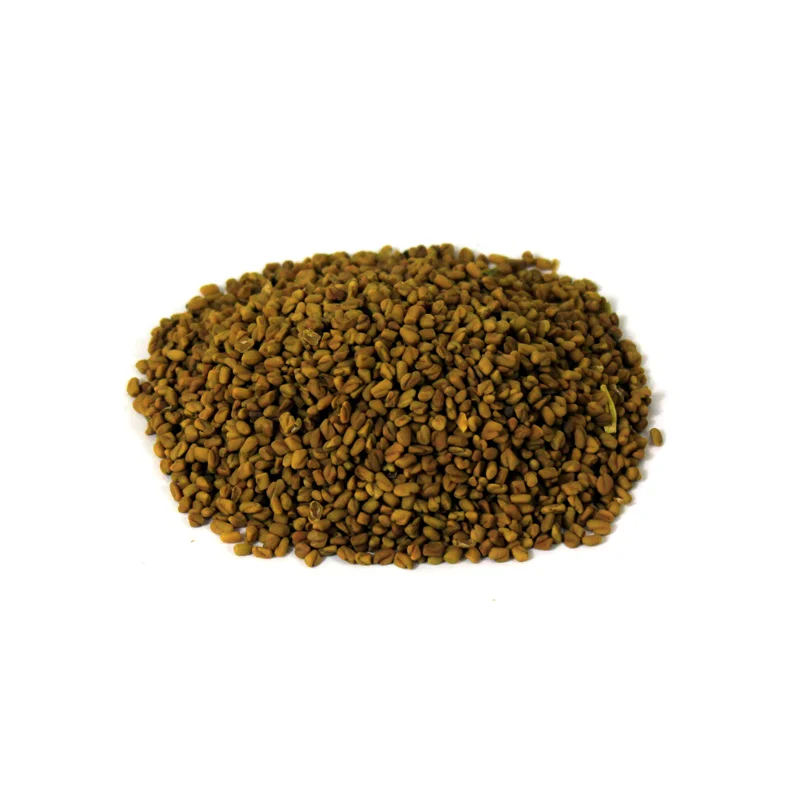
Description
Fenugreek / Hulhab is an herb similar to clover that is native to the Mediterranean region, southern Europe, and western Asia. The Fenugreek seeds / Methi ke Beej (میتھی کے بیج, میتھی دانہ) also known as Trigonella Foenum-Graecum, are used in cooking, to make medicine, or to hide the taste of other medicine. Fenugreek seeds smell and taste somewhat like maple syrup. Fenugreek leaves are eaten in India as a vegetable. In manufacturing, fenugreek extracts are used in soaps and cosmetics.
Prophet Muhammed (SAW) is reported to have said
السعي للحصول على الشفاء مع حلبة
“Seek the Shifa (healing) with Hulbah”
[Reported by Qasim Bin Abdul Rahman]
Some doctors stated
“If people knew the benefits of fenugreek they would treat it like gold.”
Health benefits
Fenugreek is taken by mouth for digestive problems such as loss of appetite, upset stomach, constipation, inflammation of the stomach (gastritis).
Fenugreek is also used to treat
- Diabetes
- Painful menstruation
- Polycystic ovary syndrome
- Obesity.
- Kidney ailments
- A vitamin deficiency disease called beriberi
- Mouth ulcers
- Boils
- Bronchitis
- Infection of the tissues beneath the surface of the skin (cellulitis)
- Tuberculosis
- Chronic coughs
- Chapped lips
- Baldness
- Cancer
- Parkinson’s disease
- Hernia
- Erectile dysfunction (ED)
- Male infertility, and other male problems.
- Women who are breastfeeding sometimes use fenugreek to promote milk flow.
It is also used for conditions that affect heart health such as “hardening of the arteries” (atherosclerosis) and for high blood levels of certain fats including cholesterol and triglycerides.
Fenugreek is sometimes used as a poultice. That means it is wrapped in cloth, warmed, and applied directly to the skin to treat local pain and swelling (inflammation), muscle pain, pain and swelling of lymph nodes (lymphadenitis), pain in the toes (gout), wounds, leg ulcers, and eczema.
Nutritional Content
- Calcium
- Folate
- Iron
- Magnesium
- Phosphorus
- Potassium
- Saponins
- Vitamin A
- Vitamin B₁
- Vitamin C
Tibb-e-Nabwi
Throat, Chest & Stomach
When fenugreek seeds are cooked in water, they will soften the throat, chest and the stomach. It relieves coughing, dryness, asthma, hard breathing and increases the sexual drive.
Digestive Health
It also relieves flatulence, phlegm, piles and the various accumulations in intestines.
Fenugreek seed dissolves the phlegm from the chest and helps against gastric and ulcer.
When its water is drunk, it will help against the pain in the stomach that results from accumulation of gaseous materials and will cleanse the intestines.
Hair Health
When it is cooked and the hair is washed with it, it will make it curly and will combat dandruff.
Women’s Health
When the flour of the fenugreek seeds is blended with some vinegar and used as a bandage on the tumor of spleen, it will dissolve it. In addition, the woman who suffers from pain in the vagina due to a tumor will benefit if she sits in the water in which the fenugreek was cooked.
Tumors
When it is used as a bandage and placed on hard / cold tumors, it will help dissolve these tumors.
Phlegm
When one eats the Fenugreek / Hulbah cooked in honey, dates or figs on an empty stomach, it will dissolve the phlegm that accumulates in the chest and stomach, and will help against coughing that accompanies such ailments.
Warnings and Precautions:
- Fenugreek is LIKELY SAFE for people when taken by mouth in amounts normally found in foods. It is POSSIBLY SAFE when taken by mouth in amounts used for medicinal purposes (amounts larger than normally found in food) for up to 6 months.
- Side effects include diarrhea, stomach upset, bloating, gas, and a “maple syrup” odor in urine.
- Fenugreek can cause nasal congestion, coughing, wheezing, facial swelling, and severe allergic reactions in hypersensitive people.
- Fenugreek might lower blood sugar.
- Fenugreek is LIKELY SAFE in pregnancy when used in amounts greater than those in food. It might cause early contractions.
- Taking fenugreek just before delivery may also cause the newborn to have an unusual body odor, which could be confused with “maple syrup urine disease.” It does not appear to cause long-term effects.
- Fenugreek is POSSIBLY SAFE when taken by mouth to increase breast-milk flow in the short-term. Some research shows that taking 1725 mg of fenugreek three times daily for 21 days does not cause any side effects in infants.
- Fenugreek is POSSIBLY SAFE when taken by mouth in children. Some reports have linked fenugreek tea to loss of consciousness in children. An unusual body odor resembling maple syrup may also occur in children drinking fenugreek tea.
- People who are allergic to other plants in the Fabaceae, including soybeans, peanuts, and green peas might also be allergic to fenugreek.